
Find accounts that fit your book
Filter motor carriers by state, fleet size, insurer, and estimated renewal window. Review the account before adding it to your prospect list.
See prospect research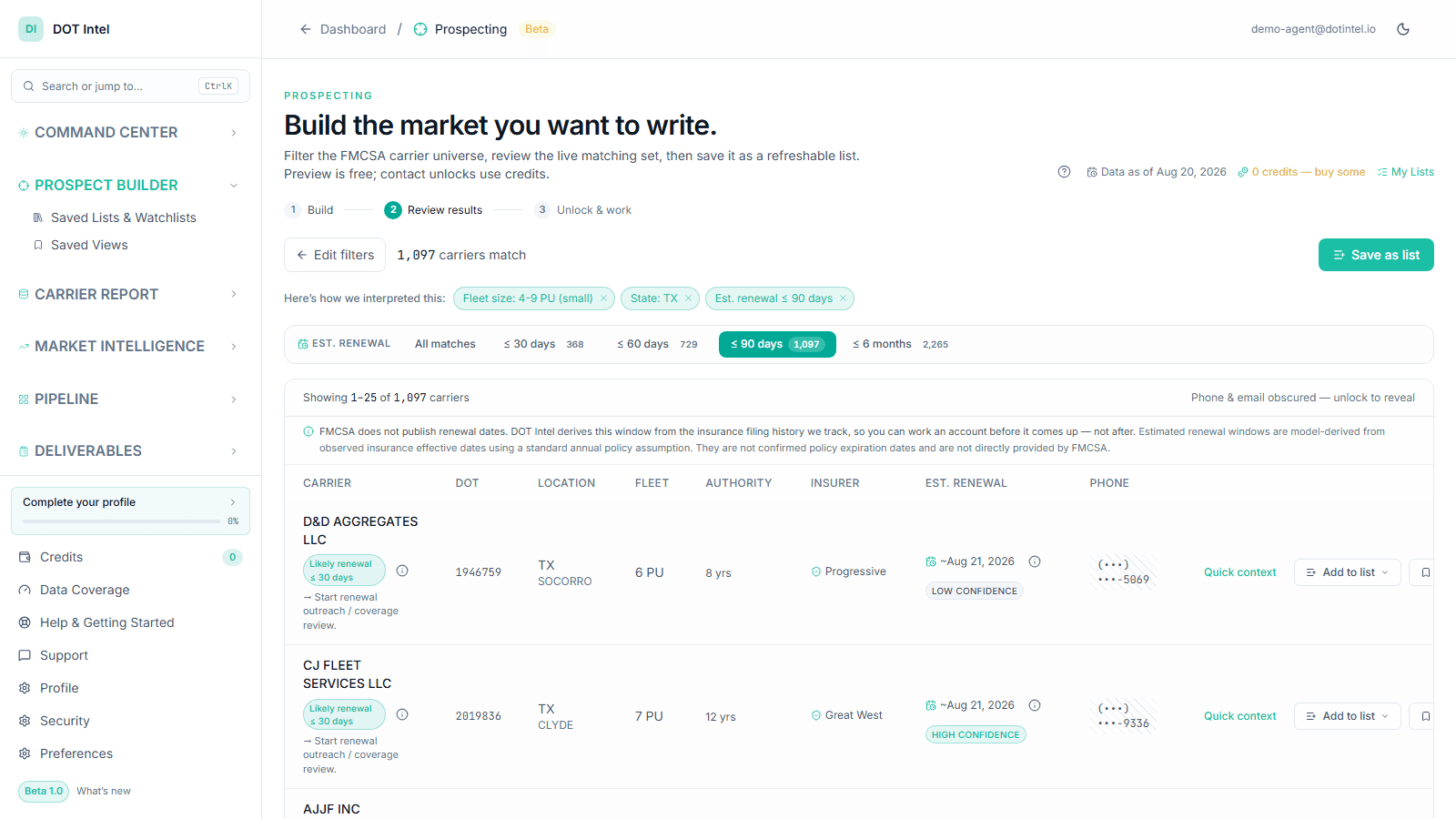
The work it helps you do
Start with a USDOT number or a prospect search. Read the account's records and the reasons it deserves attention before deciding what to do next.
Filter motor carriers by state, fleet size, insurer, and estimated renewal window. Review the account before adding it to your prospect list.
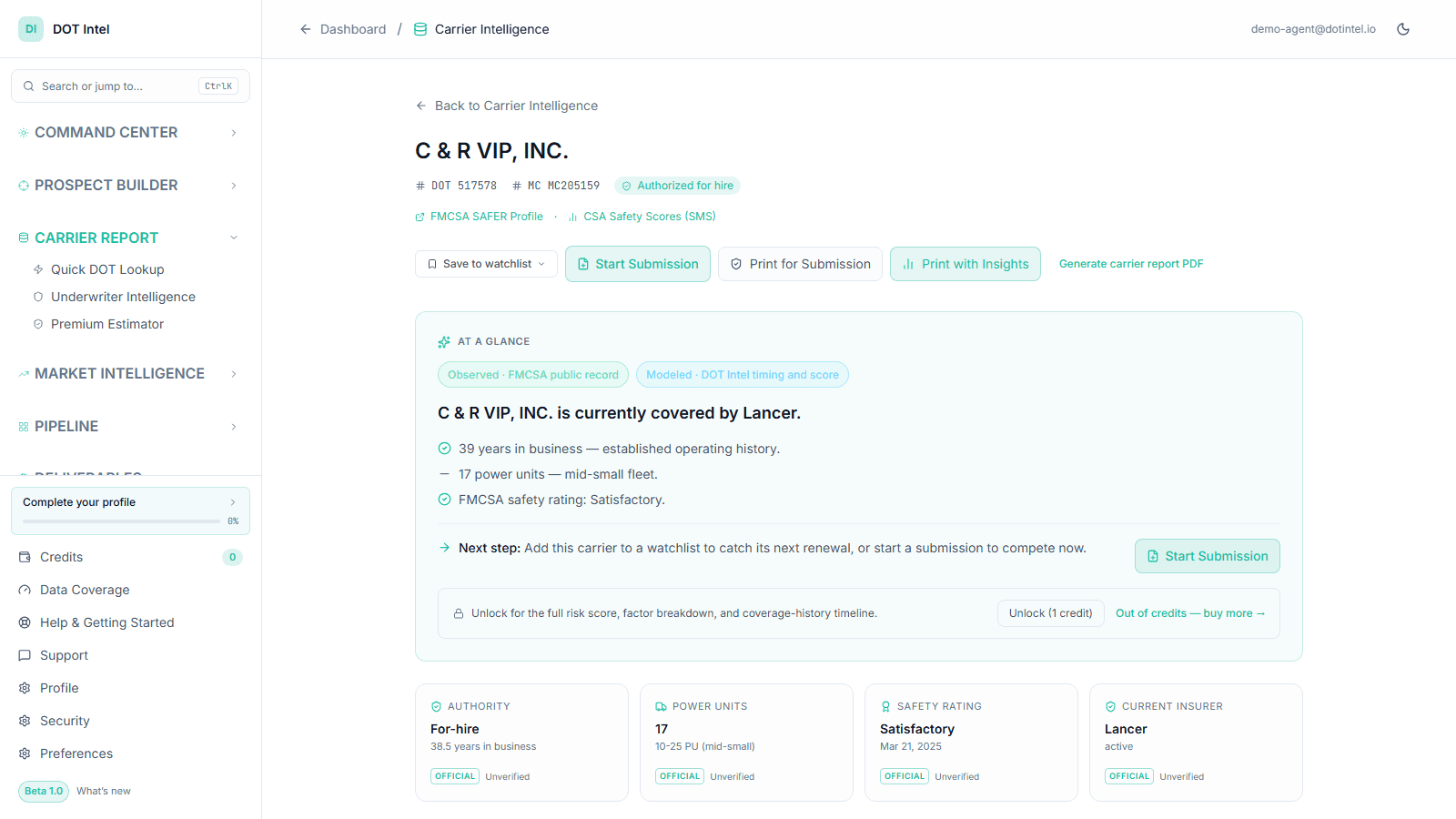
See prospect researchBring fleet, authority, public insurance history, and safety information together. Check source dates and distinguish public records from DOT Intel estimates.
See a carrier report exampleExample PDF · fictional carrier data
Compare observed insurer filing activity by state and fleet size. Use it to prepare questions for your markets; it does not confirm appetite or promise a quote.
See market research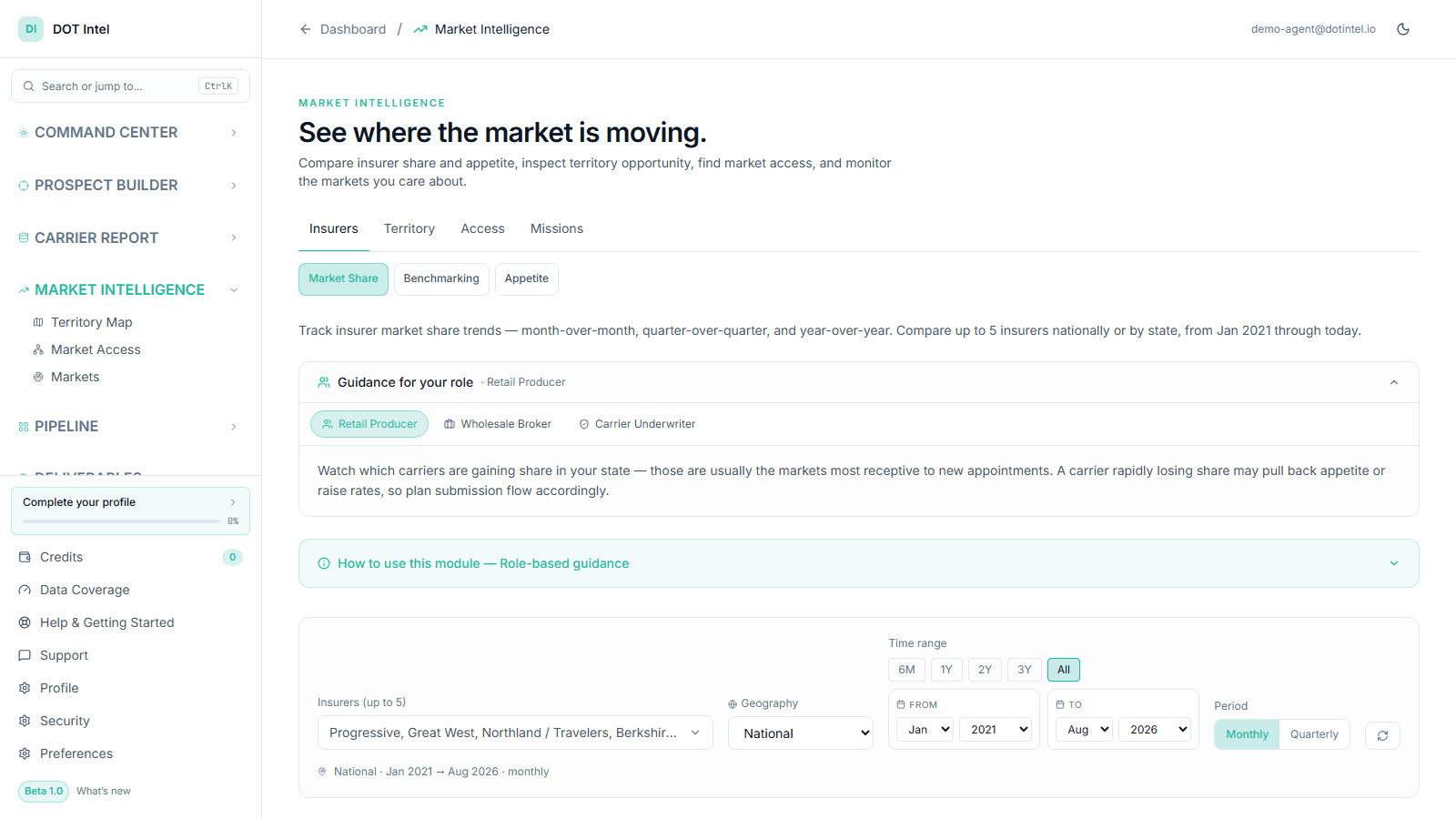
Put the report to work
Review fleet size, public insurance history, and recent filing activity. Ask about what changed and verify estimated dates.
Use the report as supporting information alongside the application, schedules, and loss runs. It does not replace the underwriter's review.
Review observed insurer activity with similar accounts. Bring better questions to the market without treating filing activity as confirmed appetite.
Watchlists help you follow accounts. Pipeline and Submission Desk help organize follow-up and submission work. Verified-domain email is optional. You can get the value of the report without moving your agency into a new CRM.
Compare plans and allowancesBefore you start
No. Use the carrier report with your existing agency systems. Pipeline, Submission Desk, and verified-domain email are supporting tools for customers who choose to use them; they are not a prerequisite for researching an account.
No. An estimated renewal window is a model based on available records, not a confirmed expiration date or proof that a fleet is shopping. Verify dates and current coverage with the insured.
No. A missing current filing means no current filing was found in the available records. It is not proof that the fleet has no insurance.
Source dates matter. Carrier, authority, and insurance pipelines use the available FMCSA feeds; SMS safety results follow FMCSA's publication schedule. Review the dates and any missing-data notice on the account before relying on a finding.
FMCSA remains the authoritative public source. DOT Intel organizes carrier, insurance, authority, and safety records around insurance work, adds insurer comparisons and labeled estimates, and gives you a report you can use alongside an application and loss history.
Free account. No card required. Your first 100 distinct carrier records share one lifetime allowance and do not reset.
Build my first 100-account list